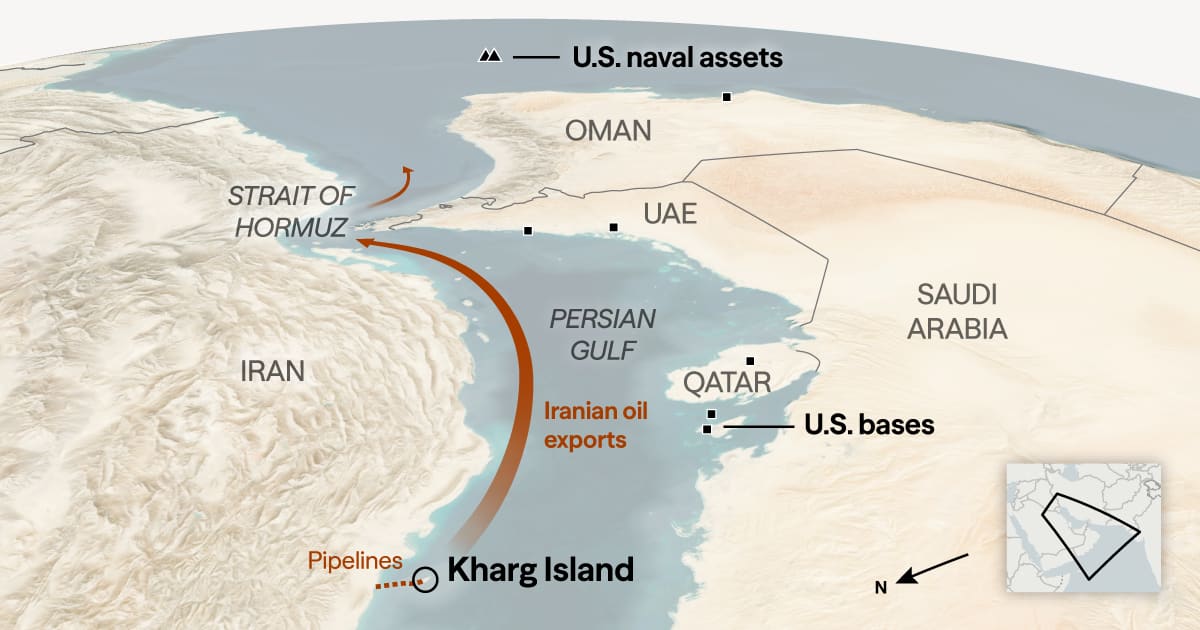
Nestled as a seemingly inconspicuous coral outcrop in the deep waters of the Persian Gulf, Kharg Island is far more than just a small speck on the map. This tiny island holds a disproportionately immense strategic importance, serving as Iran's pivotal oil export hub and a critical flashpoint in regional and global geopolitics. From its ancient roots as a trading post and a sixth-century Christian community to its modern incarnation as a linchpin of the global energy supply, Kharg Island's trajectory is deeply intertwined with the world's economic stability and the complex web of international relations.
Kharg Island: A Tiny Dot with Enormous Global Impact
Referred to by some as the "Forbidden Island" due to its stringent access protocols, Kharg Island's unassuming appearance belies its vital role. For decades, Iran has systematically invested in transforming this strategic location into the main collection, storage, and loading point for its crude oil. This involved constructing an intricate network of pipelines that channel oil from major inland producing areas directly to the island's sophisticated terminals. Here, crude is stored in massive tanks before being loaded onto supertankers destined for international buyers. This singular concentration of Iran's oil export infrastructure makes Kharg Island not just an economic asset but also its most glaring vulnerability.
Historically, Kharg Island's deep waters and strategic location made it a valuable trading post for various civilizations. Its ancient past, including evidence of a Christian community dating back to the sixth century, underscores its long-standing significance as a waypoint in regional commerce. Today, however, its importance is purely defined by its modern function: the indispensable artery through which the vast majority of Iranian oil flows to the world market. Any disruption to its operations sends immediate ripples through global energy markets, directly impacting everything from petrol prices at the pump to the cost of goods in grocery stores.
The Achilles' Heel of Iran's Oil Economy
The very efficiency and scale of Kharg Island's operations are also its greatest weakness. Before recent conflicts, an astonishing 94 percent of Iran's crude exports departed from Kharg Island. This near-total reliance on a single geographic location leaves Iran's economy acutely exposed to any sustained disruption. Experts, like those at Kpler, have consistently warned that any significant damage to this hub would immediately jeopardize most of the country's export capacity, with devastating consequences for Iran's revenue streams.
The geopolitical tensions escalating around Iran, particularly the war launched on February 28, have thrust Kharg Island into the global spotlight. In mid-March, U.S. forces conducted strikes on the island, with then-President Donald Trump declaring that "every MILITARY target" had been "totally obliterated." While U.S. officials claimed to avoid the island's oil export infrastructure, the very proximity and concentration of vital assets remain a significant concern. The intricate web of pipelines, terminals, and storage tanks on Kharg Island presents a high-value target in any sustained conflict, highlighting its fragility. President Trump's subsequent pronouncements, oscillating between aggressive warnings and promises of an imminent end to hostilities, have at times included explicit threats to either destroy or seize Kharg Island, emphasizing its perceived strategic value in any future bargaining.
Kharg Island as a Strategic Bargaining Chip
The strategic significance of Kharg Island extends far beyond its role as an oil terminal; it is also considered one of the ultimate bargaining chips in the complex geopolitical chess game involving Iran. Frank Galgano, a retired U.S. Army lieutenant-colonel and military geography professor, articulated this, noting that the island would be a crucial element in any negotiation. Its allure as a target is amplified by Iran's substantial influence over the Strait of Hormuz, a critical maritime choke point through which approximately one-fifth of the world's oil is shipped during peacetime. Any threat to this strait or its alternative export routes fundamentally alters global energy security. For a deeper understanding of its role in geopolitical negotiations, consider reading Kharg Island: Why it's the Ultimate Bargaining Chip in the Iran Conflict.
From a military perspective, some experts suggest that the U.S. could seize Kharg Island with relative ease. However, the subsequent challenges would be immense. Situated just 26 kilometers offshore, the island would immediately become susceptible to relentless attacks from Iranian missiles, drones, and artillery. As Galgano warned, "They're not just going to let us take the island... If we were to take it and hold it, our soldiers would be subject to attacks as well. We better be prepared to accept the casualties that are going to come with it." Furthermore, the practicality of such an operation has been questioned by energy experts like Tom Kloza, chief energy advisor for Gulf Oil. Kloza points out the futility of seizing the island if the Strait of Hormuz remains blocked, as all the oil loaded at Kharg Island would still need to pass through the strait. Such a scenario would not only be a "silly exercise" but would also inevitably lead to surging costs for U.S. consumers, underscoring the delicate balance between military strategy and economic realities.
Beyond the Headlines: The Far-Reaching Economic Ripple Effects
The implications of any major disruption at Kharg Island stretch far beyond Iran's immediate ability to export oil to key markets like China. While that is the most direct consequence, the ripple effect across the global economy would be profound and widespread. Any significant reduction in Iranian oil supply would tighten global markets, leading to an immediate surge in crude oil prices. This increase would translate almost instantly into higher costs at the fuel pump for consumers worldwide, affecting everything from daily commutes to the operational expenses of transport companies, airlines, and logistics networks.
The impact doesn't stop there. Higher energy costs inflate manufacturing expenses, driving up the price of goods across virtually every sector. This inflationary pressure can then lead to reduced consumer spending, slower economic growth, and even global recessions. Furthermore, the volatility introduced by such a critical supply disruption would trigger panic in commodity markets, leading to speculative trading that could further exacerbate price hikes. For insights into the broader economic ramifications, explore Kharg Island: Iran's Oil Hub and Global Economic Tensions.
Practical Implications and Preparedness:
- For Governments and Policymakers: Understanding the extreme sensitivity of this choke point is paramount for national and international energy security strategies. Diversifying energy sources, investing in renewable alternatives, and maintaining strategic oil reserves become critical tools to mitigate such risks.
- For Businesses: Companies involved in global supply chains, manufacturing, and transportation must develop robust risk assessment frameworks that account for geopolitical flashpoints like Kharg Island. Building resilience through diversified sourcing, flexible logistics, and hedging strategies can help weather price shocks.
- For Consumers: While individuals cannot directly influence these geopolitical events, understanding the interconnectedness of global energy markets can help in financial planning. Awareness of how such conflicts can influence personal expenses, from fuel to groceries, encourages informed decision-making and preparedness for economic volatility.
Conclusion
Kharg Island, though a mere dot on the map, stands as a testament to the intricate and often volatile relationship between geography, economics, and geopolitics. Its historical legacy as a waypoint has evolved into its current identity as Iran's indispensable oil export hub, making it a critical artery for the nation's economy and a significant player in global energy markets. This very concentration of power, however, renders it incredibly vulnerable, transforming it into a high-stakes bargaining chip in international conflicts. The ripple effects of any disruption to Kharg Island extend far beyond Iran, impacting global oil prices, supply chains, and the everyday lives of consumers worldwide. As tensions continue to simmer in the region, the strategic importance and inherent fragility of Kharg Island will undoubtedly keep it at the forefront of international concerns, highlighting the delicate balance required to maintain global stability and economic equilibrium.